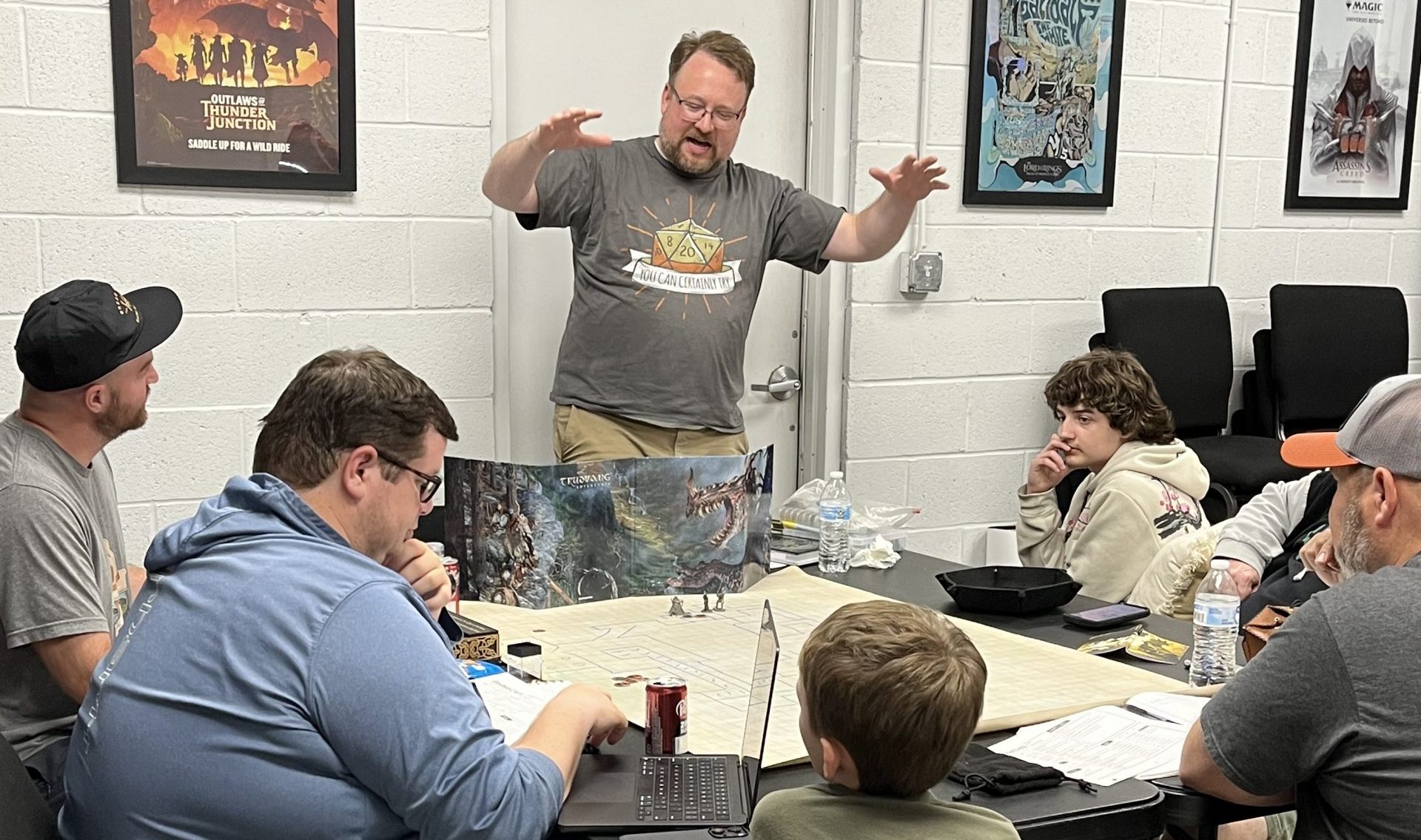
I recently ran a game of Shadowdark for my church youth group, which led several of them wanting to know: what do I need to do to start playing D&D on my own?
That question can be overwhelming for a host of reasons:
- D&D’s publisher markets many, many different products to new players.
- The sticker shock can be significant, especially if you’re in high school or younger.
- As with any niche hobby, there’s often information overload.
So in this blog, I’m going to try to narrow things down for you by answering these three questions:
(1) Should you start off with D&D or with a similar game?
(2) If you go with D&D, what should you buy?
(3) What hidden costs are you not aware of?
(1) Should you start with D&D or another game?
Dungeons & Dragons was the first tabletop roleplaying game. To this day, D&D is still the standard entry point into the hobby. But over the last fifty years it has inspired many competitors and copycats. Here are three discernible categories that some of these games fall into:
- Same kind of game, different world/setting
- Same kind of world (medieval fantasy), different rules
- Different kind of world, different kind of rules
Let me give you some points of reference to explain.
D&D is ordinarily set in a high fantasy medieval setting. But there are many different settings in which these games can be set. From Star Wars to Lord of the Rings, from ALIEN to Latino soap operas, there’s pretty much any setting you can think of. Granted, they’re not on the shelf at Target. But some of them are at Barnes and Noble. More are available on Amazon, DriveThruRPG, or Itch.io.
Considering basic game rules, D&D is played by players trying to roll high numbers on dice. There are other games where you’re rolling low. Some games use dice that have symbols instead of numbers. Still, other games use card decks for randomization. There are piles of different ways these games are played.
The Star Wars RPG, published by Edge Studios (linked above), is a perfect storm. Totally different world and totally different dice mechanics. And yet, it’s one of my favorite games of all time.
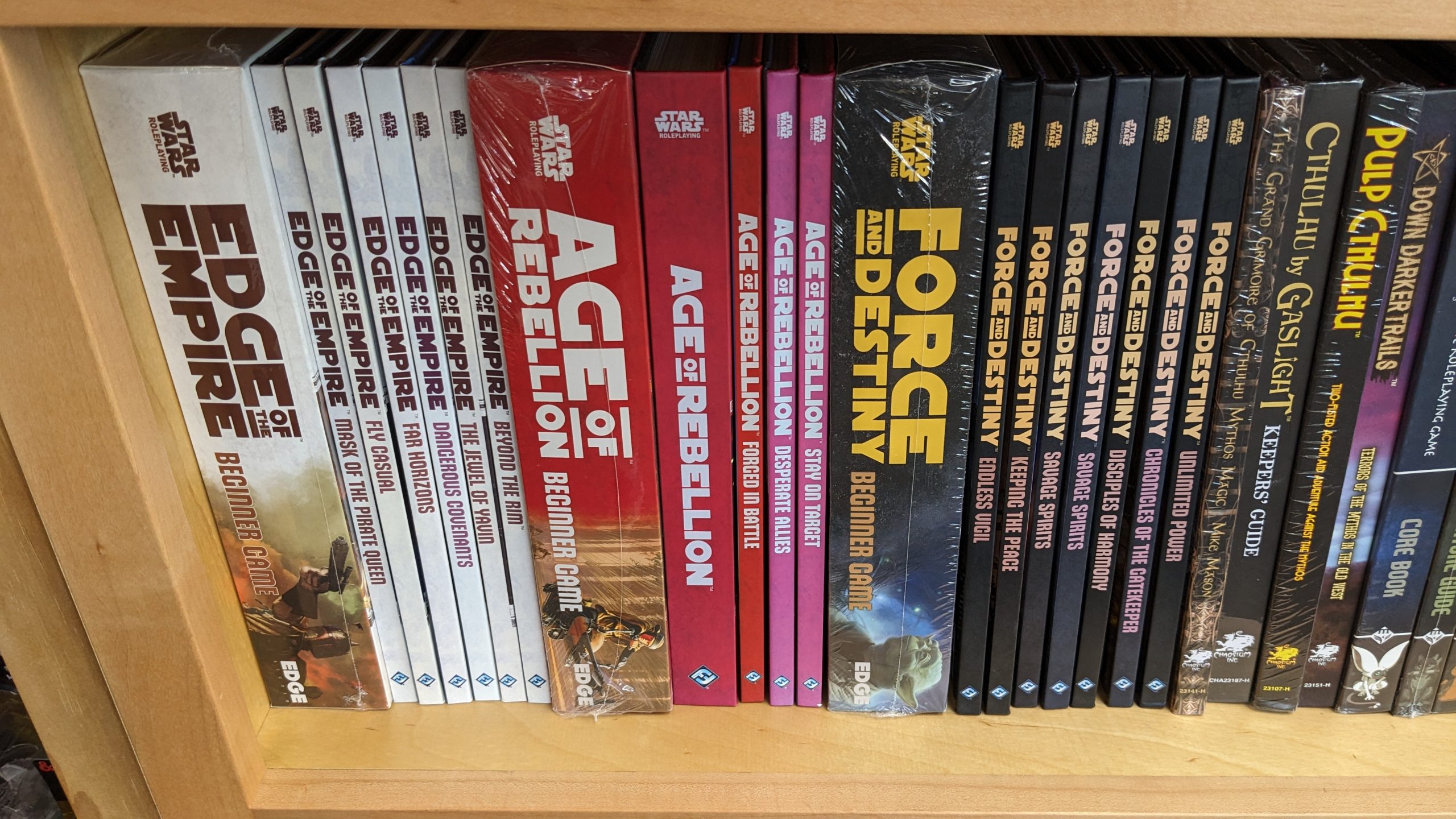
Why is all of this relevant? If in your mind, you’re wanting to play a game where you’re trying to roll high on a twenty-sided die, you should probably just start with D&D. If you’ve been reading about D&D and watching D&D live-plays, then just start with D&D. If you’re attracted to the high fantasy medieval setting, stick with D&D. One significant issue, though, is that D&D will likely cost you the most to get started.
On the other hand, if you’re interested in some of these other settings—if the mechanics of rolling high on dice seems inconsequential—or if you are interested in keeping it as cheap as possible—you don’t have to start with D&D. You could start with something more unique or niche!
My top five non-D&D games worth exploring are:
- Star Wars: Edge of the Empire (core book; special dice)
- The One Ring, 2nd Edition (physical book or pdf)
This is a Lord of the Rings RPG that does not require knowledge of basic D&D rules. Note the title is The One Ring. There is another LotR game that requires you purchase D&D as well. - Pirate Borg (for gamers 16 and older; link)
A dark and humorous pirate game set in a post-apocalyptic 1700s Carribean. Significant drug and drinking references skew this one to an older audience. - Shadowdark (for gamers 12 and older; link)
The rules feel like D&D. The game feels like old-school 1970s D&D. It’s hard to survive in this low fantasy medieval world of dungeons & monsters. - Knave 2e (for gamers under 12; physical book or pdf)
The rules, again, feel like D&D. Was originally designed for 5th graders. Simple rules, but like Shadowdark it’s not the easiest version in terms of difficulty.
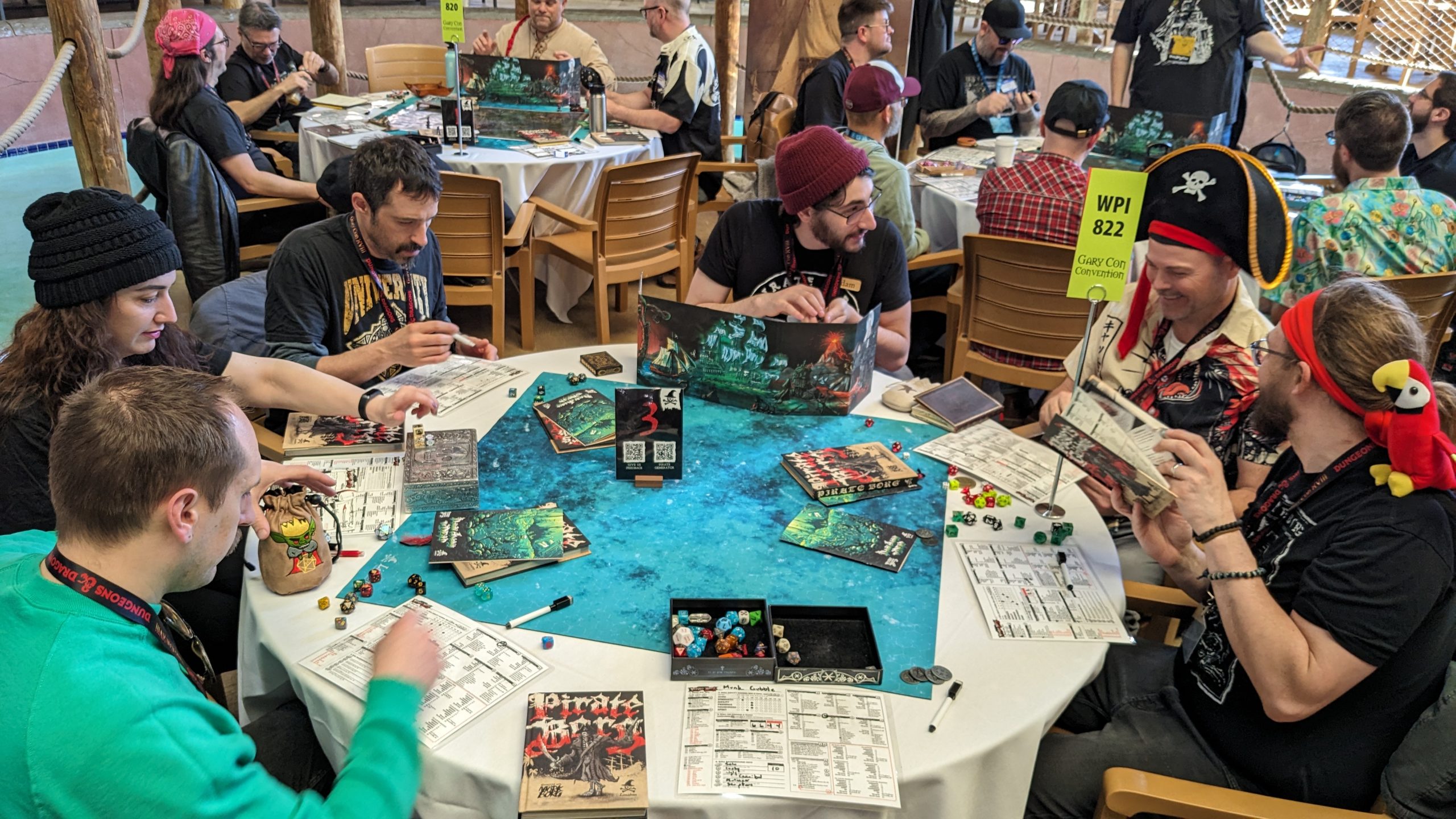
I have three others that I recommend for an extremely niche audience, but I have been reading and running these games extremely frequently:
- Cairn 2e – rules-light, low fantasy, feels very different from the current edition of D&D; but it’s totally free!
- Liminal Horror (print or free pdf or free web-based) – rules-light, modern-day horror movie-type game
- Mothership (print or pdf) – rules-light sci-fi horror, akin to ALIEN or scary Star Trek
But enough of all that! Let’s get to where most people usually start: with D&D.
(2) If you go with D&D, what should you buy?
There’s really only three options here:
- Starter Set now, core books later
- Core books now
- Buy lots of other crap you’ll regret buying later
Wizards of the Coast, who produces D&D under the parent company of Hasbro, is making millions of dollars off D&D-themed stuff. And one of their primary targets is new or potential players. So there’s no shortage of crap they want you to buy. So I want to protect you from buying things that won’t be worth it.
So let’s talk Starter Set (link here). I have purchased several starters sets for RPGs. They will last you maybe 5 games…more if you’re creative. They do not include all the game rules. They do not tell you how to make new characters. They exist to (a) give you a taste of the game and (b) give you some fun things like dice, maps, and pretty character sheets (c) so that you will buy more. It’s a funnel trying to get you to move on and buy the core books. That said, the basic D&D rules are available for free online (here), but I find them obtuse to use and understand. I’m an old-fashioned book kind of guy.
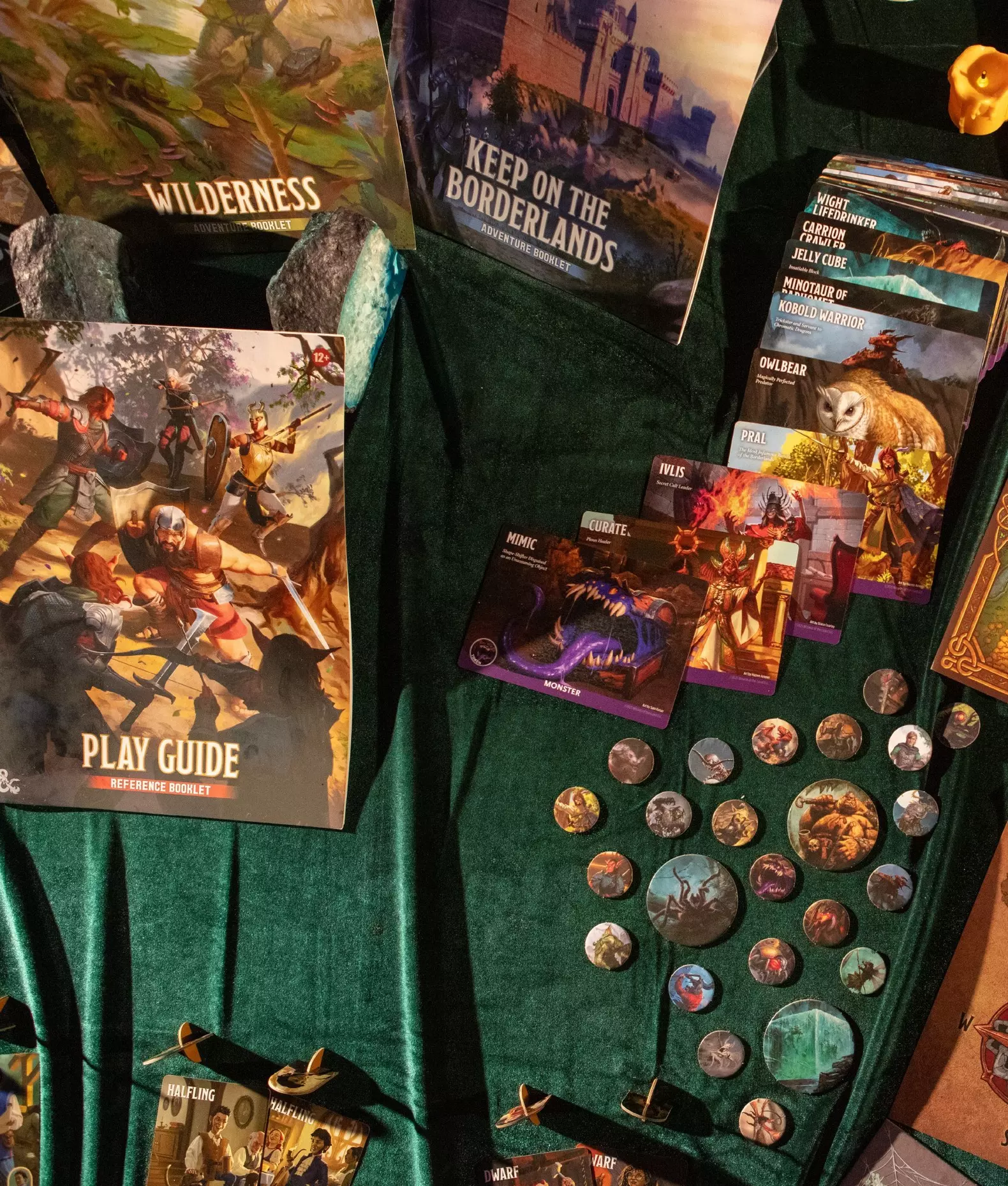
If you’re not sure if D&D is for you, the Starter set can be a very good way to test the water. I actually think the Starter Set is a great product, especially with all the dice, tokens, and maps you get. It really is a deal.
But the best way to test the water is play with a friend who already has/knows D&D. At a pricepoint of $30-45, Starter Sets seems like a cheap way in. But if you stick with the hobby, you’re going to be shelling out more money soon on the core books. So, some of you may want to skip the Starter Set altogether and go for the big kahuna.
So, core books. There are three core rulebooks needed to play D&D:
- Players Handbook (print or online): every player will need access to a copy (multiple players could share it).
- Dungeon Masters Guide (print or online): the person running the game will need a copy
- Monster Manual (print or online): again, the person running the game will need a copy
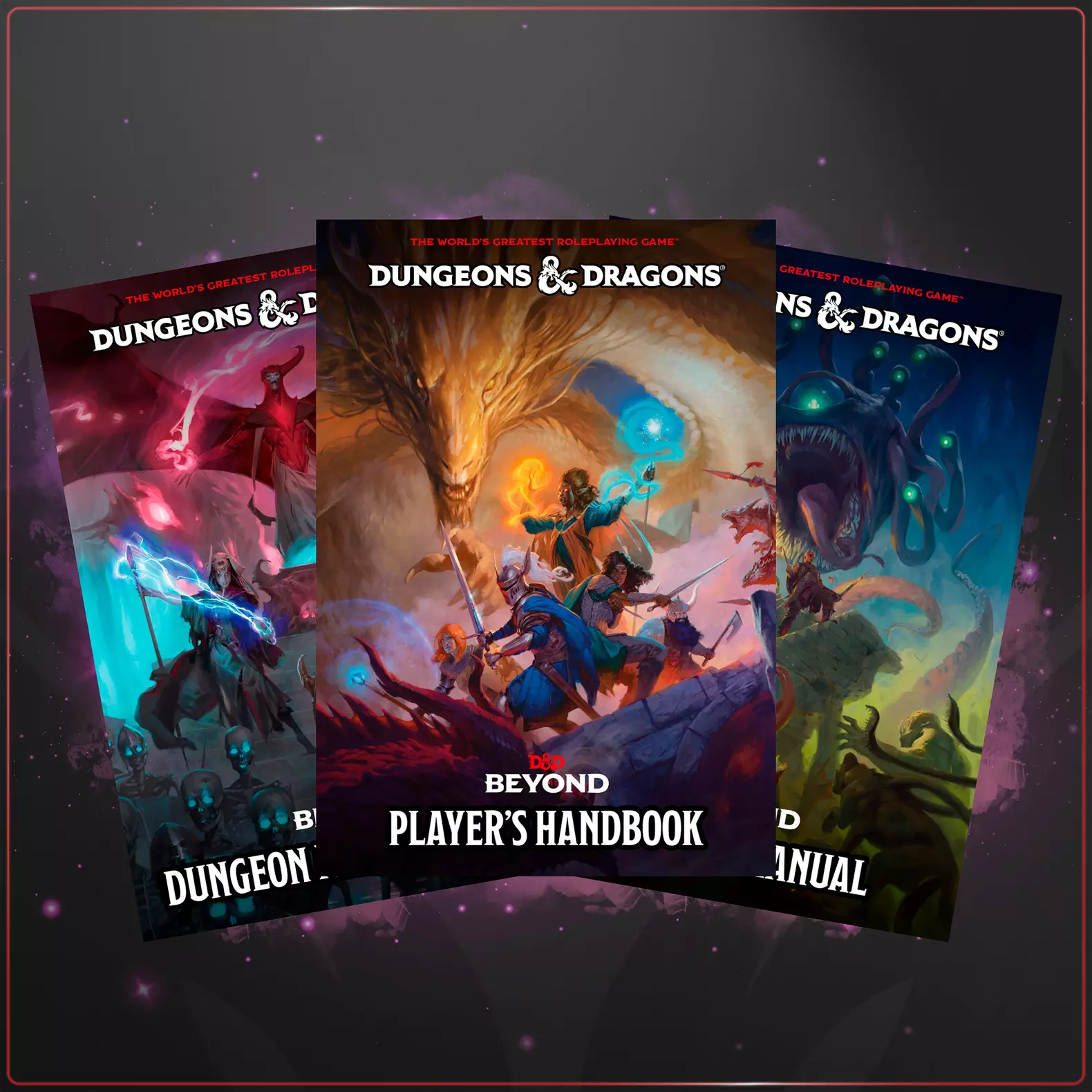
Each of these books is going to cost roughly $30-50, depending on physical vs. digital. But you probably don’t need to buy all of them in one shot.
If you’ve been invited to play in someone else’s game, borrow theirs or buy the Players Handbook and call it day.
Now, if you know no one who plays D&D—you’re starting from scratch—congratulations, you’re about to be a Dungeon Master, aka “DM” (the person who runs the game), and probably need to buy all three core books. You can also just use the Starter Set to learn the basics and expand into the core books later.
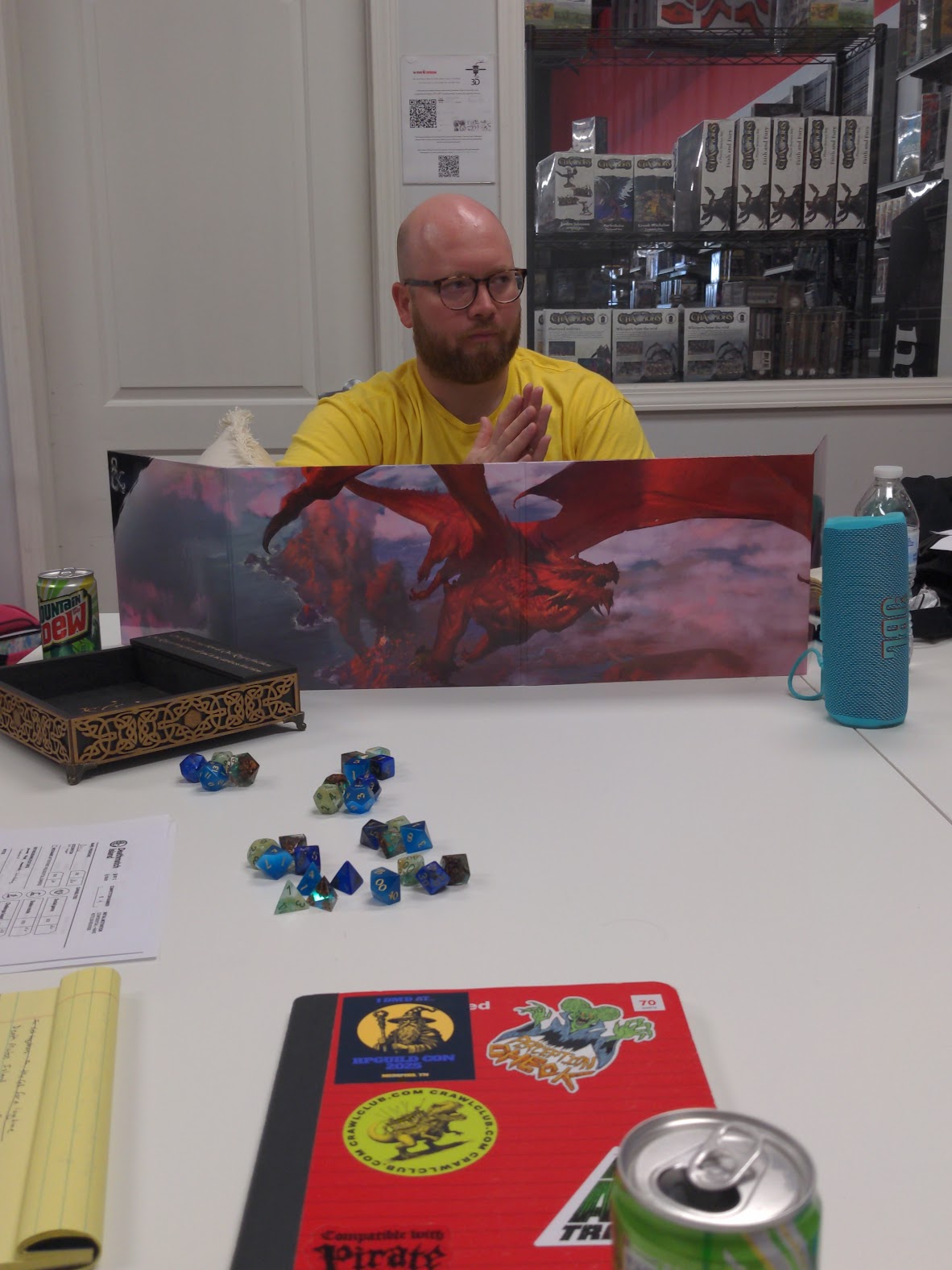
I am of the opinion that Dungeon Masters greatly benefit from having a DM Screen, to hide their notes and maps from players. D&D has released many different versions, but I’d recommend this basic one for beginner DMs.
But wait, there’s more! While many Dungeon Masters dream up their games whole-cloth from their imagination, others of us run pre-designed adventures. These adventure books can be purchased from Wizards of the Coast or third-party publishers on Amazon and DMsGuild. If I was going to point you toward some adventures that I personally admire, I’d suggest…
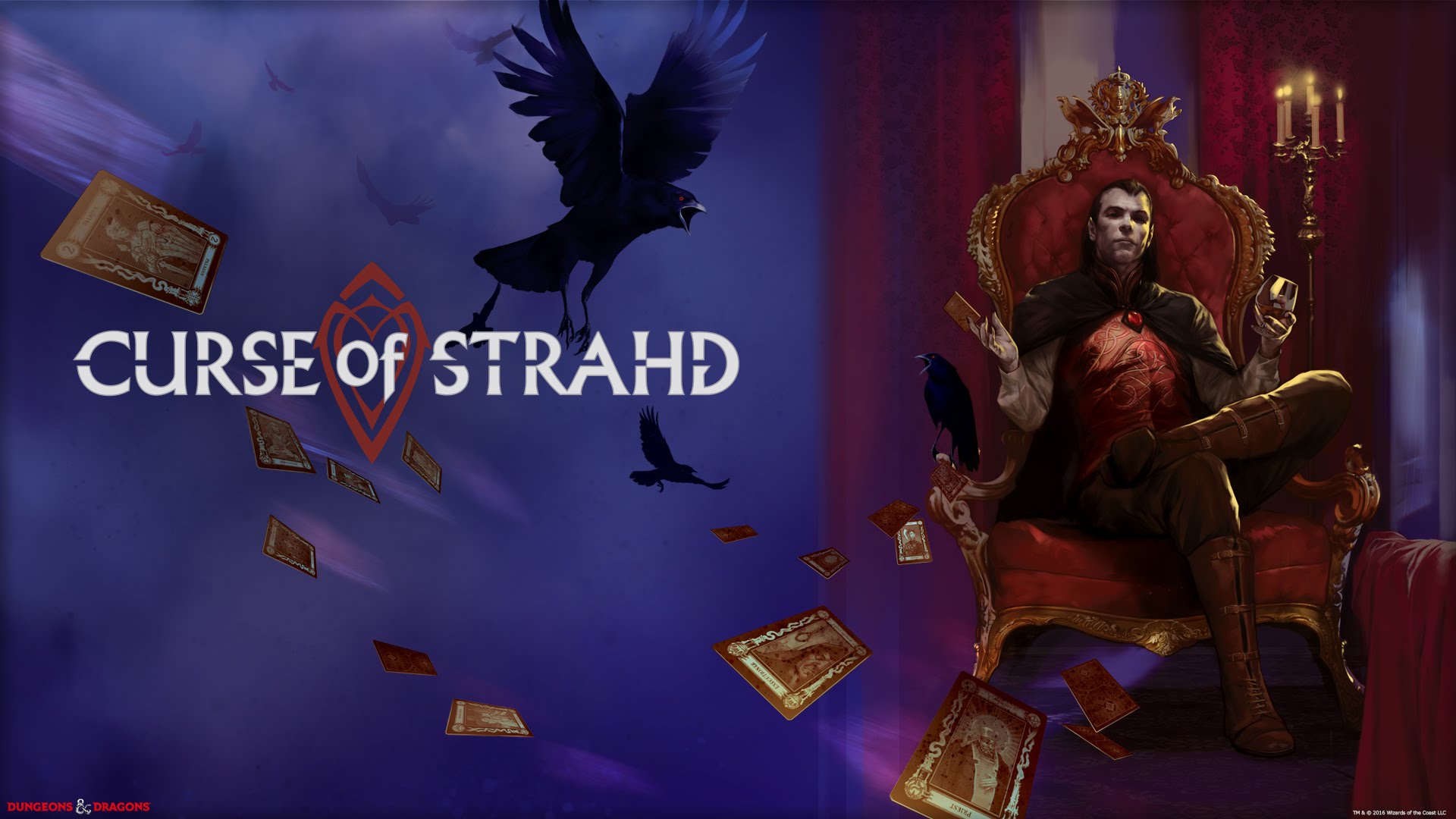
- The Curse of Strahd – a classic Gothic vampire adventure (physical or digital)
- Ghosts of Saltmarsh – helping a seaside town with some sinister trouble (only affordable in digital)
- Phandelver & Below: The Shattered Obelisk – a classic D&D adventure of helping a troubled rural town with a dungeon nearby (physical or digital)
Beyond adventure books, there are also setting books to help inspire Dungeon Masters with locations, characters, and story ideas. Sword Coast Adventurers’ Guide (print or digital) and Van Richten’s Guide to Ravenloft (print or digital) are two personal favorites of mine. But they aren’t required reading—and certainly not the first books to purchase.
Aside from the books, you’ll need polyhedral dice. These can be easily purchased on Amazon (link), at Barnes & Noble (link), or at a local game store. Any other accessories beyond that truly are optional. A Starter Set will delay the necessity to purchase maps, tokens/miniatures, and such. But, in truth, they’re not necessary to play the game. But many—if not most—of us do use these. But that leads to our final question:
(3) What hidden costs are you not aware of?
Like any hobby, RPGs are something of a black hole. There’s always a new game, a new product, a new thing to add to the collection. So, as you get into the hobby, you’ll find more books, dice, and accessories to buy. On the front end, I’d suggest a serious RPG gamer to expect the following expenses if they start with D&D:
- Initial investment: $150-200 (core books, DM Screen, optionally a Starter Set or adventure/setting book)
- Every 3 months: another $50
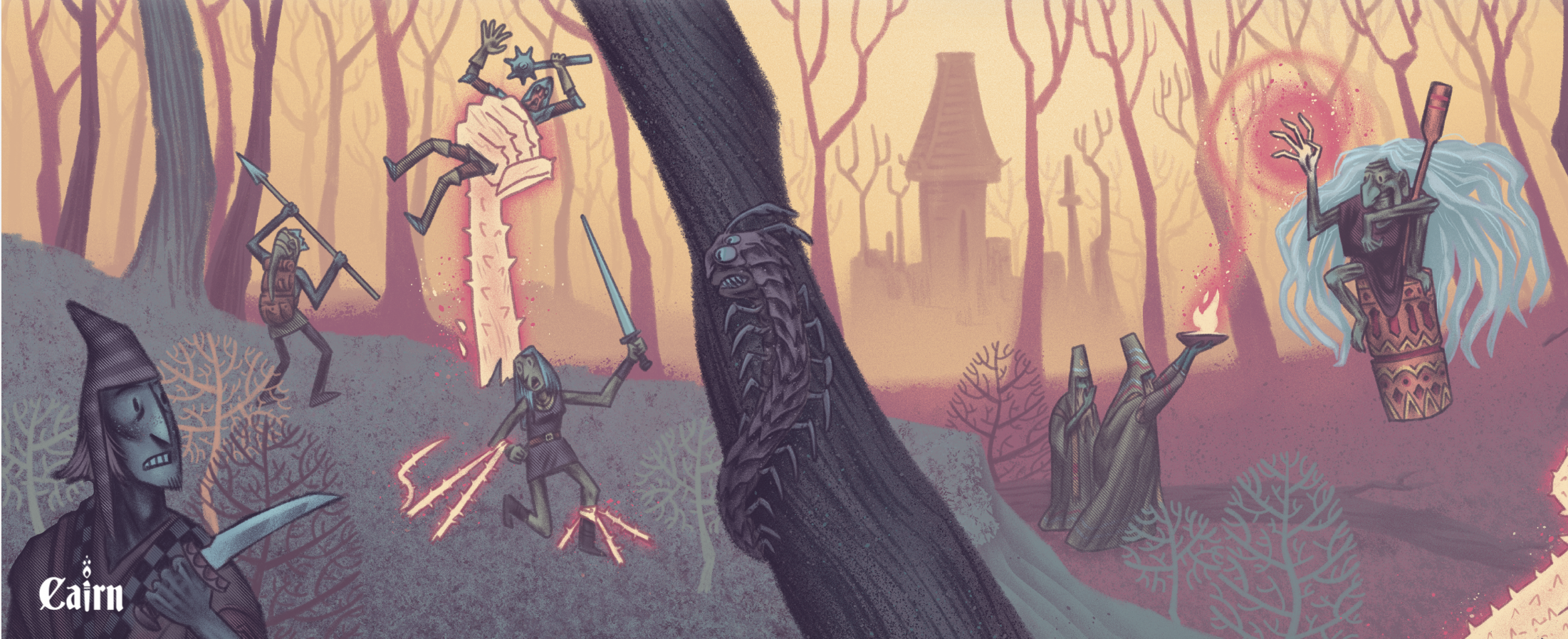
Granted, other RPGs that are not official D&D are cheaper and have less to purchase. Cairn 2e, which I mentioned earlier, has all of its rules free online. You need not purchase anything. But Cairn is very different from D&D both in its rules and setting. I personally enjoy it. But it may not be what you first envision. But, you know, a free game that is good is worth checking out!
Likewise, Shadowdark will cost you around $60 to get started. Knave 2e will cost you less than $40. They both feel more like D&D than Cairn does. Lord of the Rings and Star Wars will cost you around $60 to get started. Maybe $120 if you’re the Game Master. In short, big companies and big brands charge more. If you get off the beaten path, you save money…but it may not be exactly what you want/expect.
If you’re like me and continue in the hobby for fifteen years, you’ll end up buying all these games, reading them, and running 40% of them. Bu that’s the difference between being a D&D person and an RPG enthusiast.
Conclusion
In the end, I hope you can make a more informed decision and quickly be enjoying the RPG hobby. It’s very rewarding to get together with friends and tell stories you all reminisce about later.
In the end, there’s something very human—and primal—about storytelling. It taps into a creative urge that—I believe—points to the Divine. But lest I get overly sentimental or theological, let me know how I can help point you in the right direction. What questions do you have? Are there products that you’re contemplating? Sound off in the comments below or on my Bluesky if you have any thoughts.
Disclosure: Some of the links in this post are affiliate links. That means if you click and make a purchase, I may receive a small commission at no extra cost to you. Thanks for supporting the blog!
Leave a Reply